
It's one of the most common questions we get from businesses trading across borders: can a single company hold more than one EORI number? The short answer is yes — but only in specific, legitimate circumstances. The rule that governs everything is simple to state and easy to misapply, so this guide breaks down exactly when multiple EORI numbers are correct, when they're a mistake, and how branches, subsidiaries and trading groups are treated.
The core rule: one EORI per operator, per jurisdiction
The founding principle is this: one economic operator holds one EORI number within each customs jurisdiction. An economic operator is a legal entity — a limited company, a partnership, a sole trader, or an individual acting in a business capacity.
So a German company cannot hold two separate German (DE) EORI numbers. Customs authorities deliberately issue a single identifier per entity so that all of that operator's declarations, guarantees and authorisations sit under one reference. Applying for a second EORI in the same country where you already have one is not permitted and simply creates confusion.
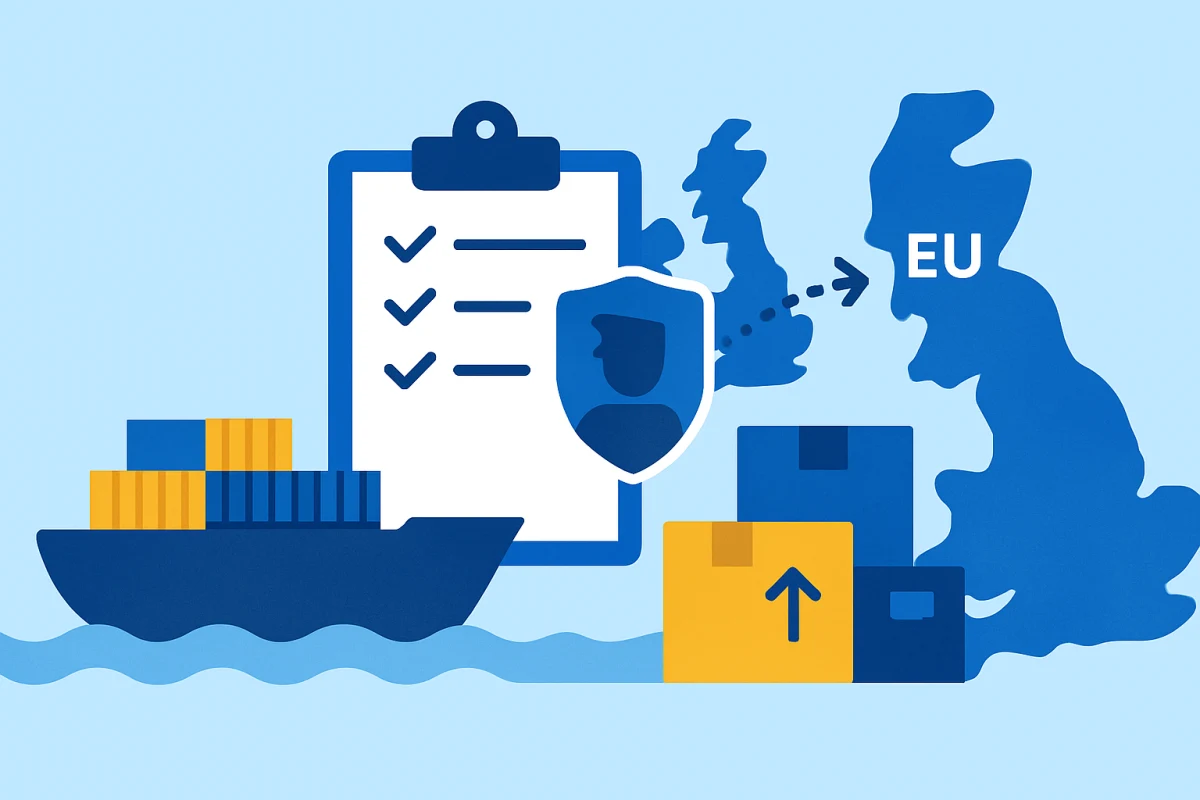
What you can hold is one EORI in each separate jurisdiction where you need to interact with customs. Post-Brexit, the UK and the EU are separate customs territories — so a business genuinely trading in both may legitimately need a GB EORI and an EU EORI.
When multiple EORI numbers are legitimate
Holding more than one EORI number is normal for many international traders. The most common valid combinations are:
- A GB EORI for making declarations in Great Britain (England, Scotland and Wales).
- An XI EORI for movements involving Northern Ireland under the Windsor Framework.
- An EU EORI (for example DE, FR or IE) issued by a single EU member state, valid across the whole EU.
These are different jurisdictions, so holding one of each for the same group is not a duplication — it's a requirement. You cannot use a GB EORI to clear goods in France, and you cannot use a DE EORI to import into Great Britain.
The GB + XI relationship
A GB EORI and an XI EORI are closely linked. If your business already has a GB number and needs to move goods to or from Northern Ireland, you apply for an XI EORI that is typically issued alongside your existing GB registration. They share a numeric core but differ by prefix — see our guide to the EORI number format for how GB and XI numbers are structured.
Branches versus subsidiaries
This is where confusion often creeps in. The treatment depends on legal structure:
| Structure | Separate legal entity? | EORI treatment |
|---|---|---|
| Branch / establishment | No — part of the parent | Uses the parent entity's EORI; not a separate registration |
| Subsidiary (separate company) | Yes — its own legal person | Gets its own EORI in the relevant jurisdiction |
A branch is not a distinct legal entity — it's an extension of the parent company. It therefore trades under the parent's EORI rather than obtaining its own. A subsidiary, by contrast, is a separate legal person and is entitled to (and generally needs) its own EORI number in each jurisdiction where it trades.
So a corporate group with three subsidiaries in three EU countries will have three separate EU EORIs — one per company. That's not "multiple EORIs for one operator"; it's one EORI each for three distinct operators.
Shared EORI within a single EU member state
An EU EORI issued by one member state is valid throughout the entire EU. You do not need a separate EORI for each of the 27 countries. A company registered for EORI in Ireland can use that single Irish number to lodge declarations in the Netherlands, Belgium, Germany or anywhere else in the customs union.
This is a key point businesses often miss and it prevents unnecessary duplicate applications. Where you register once, you're covered EU-wide — unlike the UK, which now sits outside that arrangement.
Post-Brexit dual registration for EU–UK traders
Because Great Britain left the EU customs union, traders moving goods in both directions frequently need registrations on both sides:
- An EU EORI for the export/import formalities on the EU side.
- A GB EORI for the corresponding UK-side declarations. Read more about EORI numbers in the UK.
This dual set-up is entirely correct and expected. It is not "having two EORIs for one entity" in the prohibited sense — each number belongs to a different customs territory.
Worked example: Dublin HQ with GB sales and an NI warehouse
Imagine a company headquartered in Dublin that sells to customers in Great Britain and operates a warehouse in Northern Ireland. Here's how its EORI footprint typically looks:
| Activity | Jurisdiction | EORI needed |
|---|---|---|
| Import/export within and out of the EU | EU (Ireland) | IE EORI (valid EU-wide) |
| Importing into Great Britain | Great Britain | GB EORI |
| Goods moving to/from the NI warehouse | Northern Ireland | XI EORI |
In this scenario the same corporate group legitimately holds three EORI numbers — IE, GB and XI — because it is active in three distinct customs contexts. Each is doing a different job, and none duplicates another.
Note that whether the Dublin company can obtain a GB or XI EORI in its own name, or needs a UK-established presence or an intermediary, depends on its establishment status and the type of movements involved. Establishment rules matter here, so check current guidance before applying.
How to avoid accidental duplicates
The most common error is a business applying for a second EORI in the same country because it can't locate the first one. Before you apply again:
- Check whether your company already has a number in that jurisdiction using our EORI number checker.
- Confirm the correct legal entity name and identifier are on the registration.
- Only apply for a new number if it's for a genuinely different jurisdiction or a separate legal entity.
If you discover a duplicate has already been created, contact the issuing customs authority to have it resolved — running declarations across two numbers for the same entity causes reconciliation problems.
Next step
Before applying for any additional EORI, verify what you already hold. Run your existing number through our EORI checker to confirm it's valid and active, then map your trade flows against the jurisdictions above. If you genuinely trade across the GB, XI and EU borders, holding a number for each is not only allowed — it's exactly what you should have.



Comments (0)
No comments yet. Be the first to share your thoughts!
Leave a comment
Your comment will appear after it's reviewed. Your email is never shown publicly.