
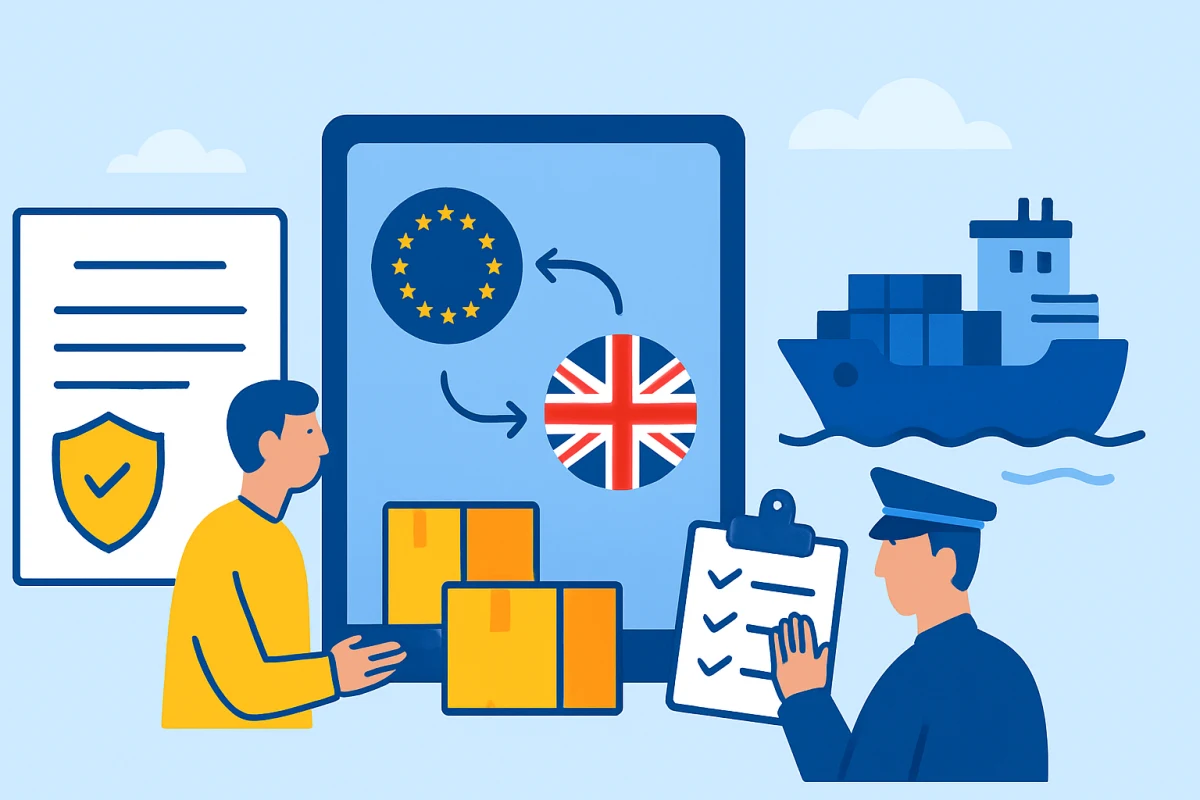
If you've ever booked a shipment across a UK or EU border, chances are the freight forwarder or courier asked for your EORI number before they'd move the goods. It's one of the most common reasons a booking stalls — and one of the least understood. This guide explains exactly what an EORI number does in the shipping chain, where it appears on your paperwork, and what goes wrong at customs when it's missing or wrong.
What an EORI number actually does in shipping
An EORI (Economic Operators Registration and Identification) number is the unique ID that customs authorities use to identify the business responsible for a shipment. Every customs declaration needs to name a legal entity as the importer of record or exporter of record — and that entity is identified by its EORI. Without it, customs has no way to link the goods to a registered trader.
In plain terms: the EORI is how customs answers the question "whose goods are these, and who is legally accountable for the duty, VAT and compliance?" If you're new to the concept, our explainer on what an EORI number is covers the basics before you read on.
Why freight forwarders and couriers ask for it
Carriers don't ask for your EORI to be awkward. They physically cannot lodge a customs declaration without one. Whether it's a full freight consignment or a parcel going out with an integrator like DHL, FedEx or UPS, the same rule applies: the declaration software will not accept a submission that lacks a valid EORI for the party clearing the goods.
The forwarder or broker acts on your behalf, but the eori number for shipping must belong to the trader who is the importer or exporter of record — usually you, not the carrier. When they email asking for it, they're gathering the data they need to build your entry accurately.
Freight forwarder vs consignee — who is responsible?
This trips a lot of businesses up. The freight forwarder or customs broker submits the declaration, but they are almost never the importer of record. Responsibility breaks down like this:
| Party | Role | Provides the EORI? |
|---|---|---|
| Importer / consignee | Legally responsible for duty, VAT and compliance | Yes — their own EORI |
| Exporter / consignor | Responsible for the export declaration | Yes — their own EORI |
| Freight forwarder / broker | Files the declaration on your behalf | Uses your EORI, not theirs |
| Carrier / shipping line | Physically moves the goods | No — moves under a separate authorisation |
If you're importing into the UK, you generally need your own EORI even when a broker handles everything. You can't simply borrow the forwarder's — the declaration must name the party that owns the goods and bears the liability.
Where the EORI appears in shipping paperwork
The number doesn't just sit in one place. For eori number freight movements, it flows through several documents and systems. Here's where you'll typically see it:
- Commercial invoice — both shipper's and consignee's EORI are usually printed here so customs and the broker can read them straight off the document.
- Customs declaration (C88 / SAD) — the EORI populates the boxes identifying the importer, exporter and declarant. In the UK's CDS system it's a mandatory data element.
- Courier pre-clearance data — integrators collect your EORI at booking so they can pre-lodge the entry before the plane or van even arrives.
- Broker instructions — when you brief a customs agent, your EORI is one of the first fields on their form.
- Carrier and forwarder portals — many online booking platforms won't let you complete a cross-border shipment without a valid EORI in your account profile.
Note that the EORI is not usually a formal field on the bill of lading itself, but the consignee details on the B/L must match the party named on the customs entry — mismatches cause delays even when the EORI is technically correct.
What a valid EORI looks like
A UK EORI starts with the country prefix GB followed by your VAT number and a suffix — for example GB123456789000. Businesses moving goods to or from Northern Ireland may also need an XI EORI. If you're unsure your number is formatted correctly before handing it to a carrier, run it through our EORI number checker to confirm it's live and valid.
What happens at customs without a valid EORI
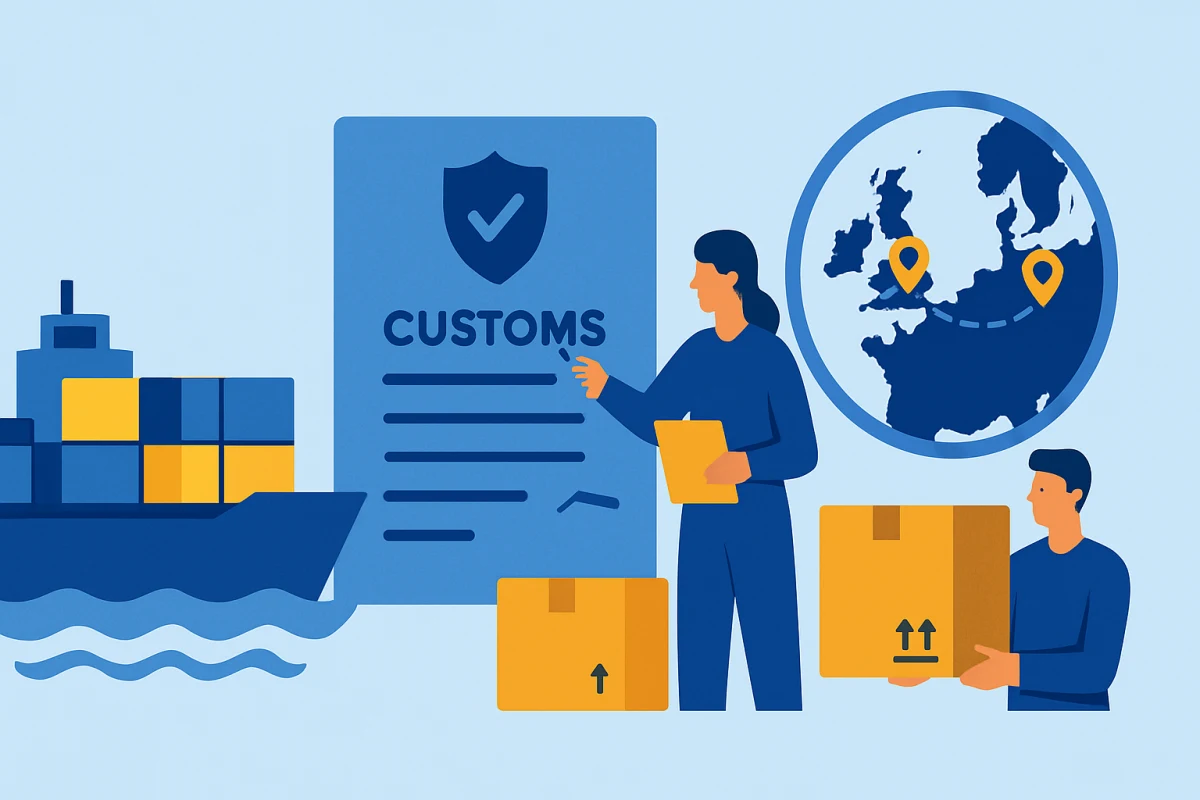
This is where the cost of a missing number becomes real. Customs clearance and EORI are inseparable — no valid EORI, no clearance. Here's the typical chain of events when something's wrong:
- The declaration is rejected. The broker's software bounces the entry back the moment it can't validate the EORI.
- The shipment is held. Goods sit in a bonded warehouse, container yard or courier depot while the issue is resolved.
- Storage and demurrage fees start accruing. Ports and depots charge per day. What was a quick delivery becomes an expensive one.
- Perishable or time-sensitive goods spoil or miss their window. Deadlines lapse; retail slots are lost.
- The shipment is returned to sender. If it can't be cleared, the carrier eventually sends it back — and you pay return freight on top of everything.
A wrong EORI is just as damaging as a missing one. A typo, a lapsed number, or using a group company's EORI instead of the trading entity's will all fail validation. Because carriers often pre-clear before goods physically arrive, an error caught at 2am can hold your consignment until office hours — and by then the queue has grown.
Common EORI mistakes that hold shipments
- Giving the forwarder your VAT number instead of your EORI (they look similar but aren't identical).
- Using an EORI issued in the wrong territory — a GB number won't work for an EU import declaration, and vice versa.
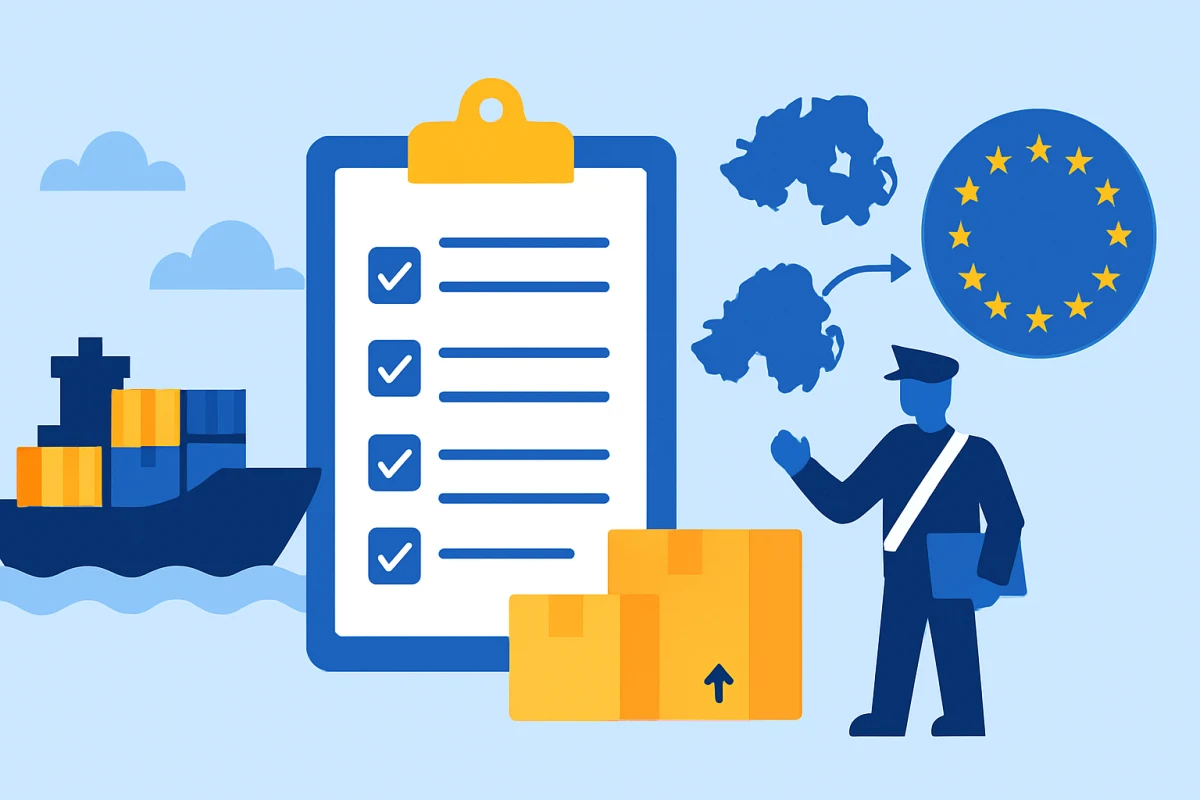
- Not having an XI EORI when moving goods into Northern Ireland.
- Assuming the carrier will "sort it out" — they can't declare under a number you don't have.
- Letting an EORI lapse after a business restructure or VAT deregistration.
How to avoid clearance delays
The fix is straightforward: have a valid EORI ready before you book freight, and give the correct number to every party in the chain. A few practical habits help:
- Store your EORI in your carrier and forwarder portal profiles so it auto-populates each booking.
- Print both shipper and consignee EORIs on every commercial invoice.
- Confirm your counterparties have their own valid EORIs for their side of the border.
- Validate the number periodically — especially after any VAT or company changes.
If you don't yet have a number, applying is free and usually quick — our step-by-step guide on how to get an EORI number walks you through the application so you're not scrambling once goods are already in transit.
Next step
Before your next cross-border booking, do two things: make sure the business named as importer or exporter of record holds a valid EORI, and confirm that number is correct. If you already have one, take thirty seconds to run it through our EORI checker — catching a lapsed or mistyped number now is far cheaper than paying demurrage while your container sits at the port. If you don't have one yet, get the application in before you ship.
Comments (0)
No comments yet. Be the first to share your thoughts!
Leave a comment
Your comment will appear after it's reviewed. Your email is never shown publicly.