
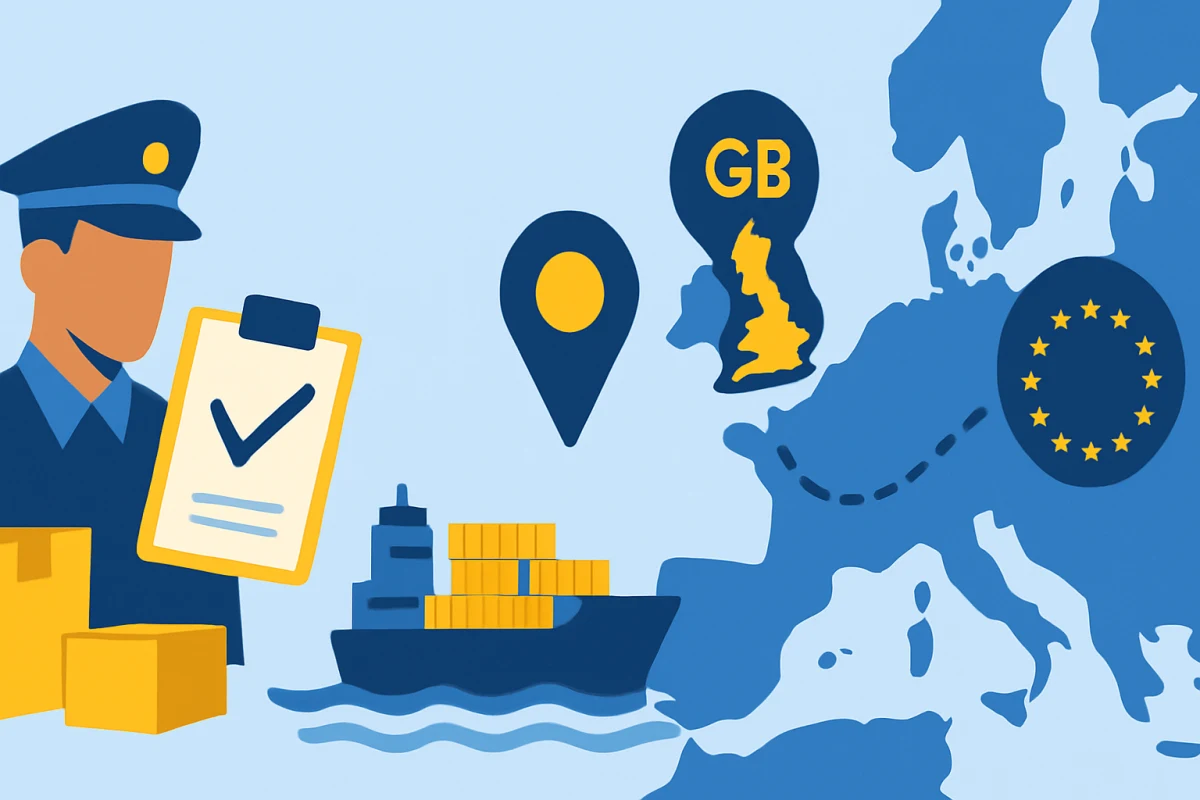
Since Brexit, "getting an EORI number" is no longer a single, simple task. Depending on where your goods start, where they end up, and who's making the customs declaration, you may need a GB EORI, an XI EORI, an EU EORI — or a combination of all three. Getting the wrong one (or the wrong prefix on a declaration) causes rejected entries, stuck shipments and unexpected costs.
This guide breaks down the three types of EORI in plain terms, then walks through the most common trade routes so you can see exactly which number applies to each.
The three types of EORI after Brexit
An EORI number identifies you to customs authorities. Before Brexit, one UK EORI covered trade with the EU. Now the UK and EU are separate customs territories, so the identifier system split into three families.
| Type | Prefix | Issued by | Used for |
|---|---|---|---|
| GB EORI | GB | HMRC | Customs in Great Britain (England, Scotland, Wales) |
| XI EORI | XI | HMRC | Trade involving Northern Ireland under the Windsor Framework |
| EU EORI | Country code (e.g. FR, DE, IE) | An EU member state | Customs in the EU when you are the declarant/importer there |
GB EORI
A GB EORI starts with the letters GB followed by your VAT number (or a unique number if you're not VAT-registered) plus three trailing digits. It's issued by HMRC and is required to import into or export from Great Britain. If you're a UK business trading internationally, this is almost always your starting point. See our full guide to EORI numbers in the UK for how registration works.
XI EORI
An XI EORI starts with XI and covers movements connected to Northern Ireland. Under the Windsor Framework, Northern Ireland remains aligned with certain EU customs rules, so a separate identifier is used for these movements. You generally need one if you move goods into or out of NI, act as a declarant in NI, or apply for certain NI authorisations and schemes. Read more on the XI EORI page.
EU EORI
An EU EORI is issued by a member state's customs authority and starts with that country's two-letter code — for example FR (France), DE (Germany) or IE (Ireland). You need one when your business is the named importer or declarant inside the EU. A single EU EORI is valid across all 27 member states, so you don't need one per country — you register once, usually in the country where you first lodge a declaration or hold your main establishment.
How to tell the numbers apart
The prefix does the heavy lifting. GB, XI and EU EORIs follow slightly different structures, and mixing them up on a declaration is one of the most common causes of errors. If you're unsure whether a number is valid or which system it belongs to, our EORI number checker confirms the format and status, and the EORI number format guide shows worked examples of each type.
Route-based examples: which EORI you actually need
The easiest way to work out your requirements is to map each trade route. Here are the four scenarios most traders face.
1. GB → EU export (e.g. Manchester to Paris)
You're exporting goods out of Great Britain into the EU.
- GB EORI — required to clear the goods out of GB customs.
- EU EORI — needed only if your business is the importer of record in the EU. If your customer or an EU-based intermediary imports the goods, they use their own EU EORI, not yours.
Many GB exporters selling on delivered-duty-paid (DDP) terms end up needing an EU EORI because they take on the role of EU importer. If you sell on delivered-at-place (DAP) terms and the buyer imports, a GB EORI alone may be enough on your side.
2. EU → GB import (e.g. Rotterdam to London)
You're bringing goods into Great Britain from the EU.
- GB EORI — required if you are the UK importer making the GB import declaration.
- EU EORI — needed on the EU side to export the goods, held by whoever acts as the EU exporter.
A UK business importing its own stock will use its GB EORI for the GB entry. The EU supplier handles the export using their EU EORI.
3. NI → Republic of Ireland (e.g. Belfast to Dublin)
Movements between Northern Ireland and the Republic of Ireland are a special case. Because NI stays aligned with EU customs rules for goods, most north–south movements don't require the same customs declarations as GB–EU trade. Where an identifier is needed for NI-related processes, you use your XI EORI. This is the scenario XI numbers were designed for.
4. GB → NI (e.g. Birmingham to Belfast)
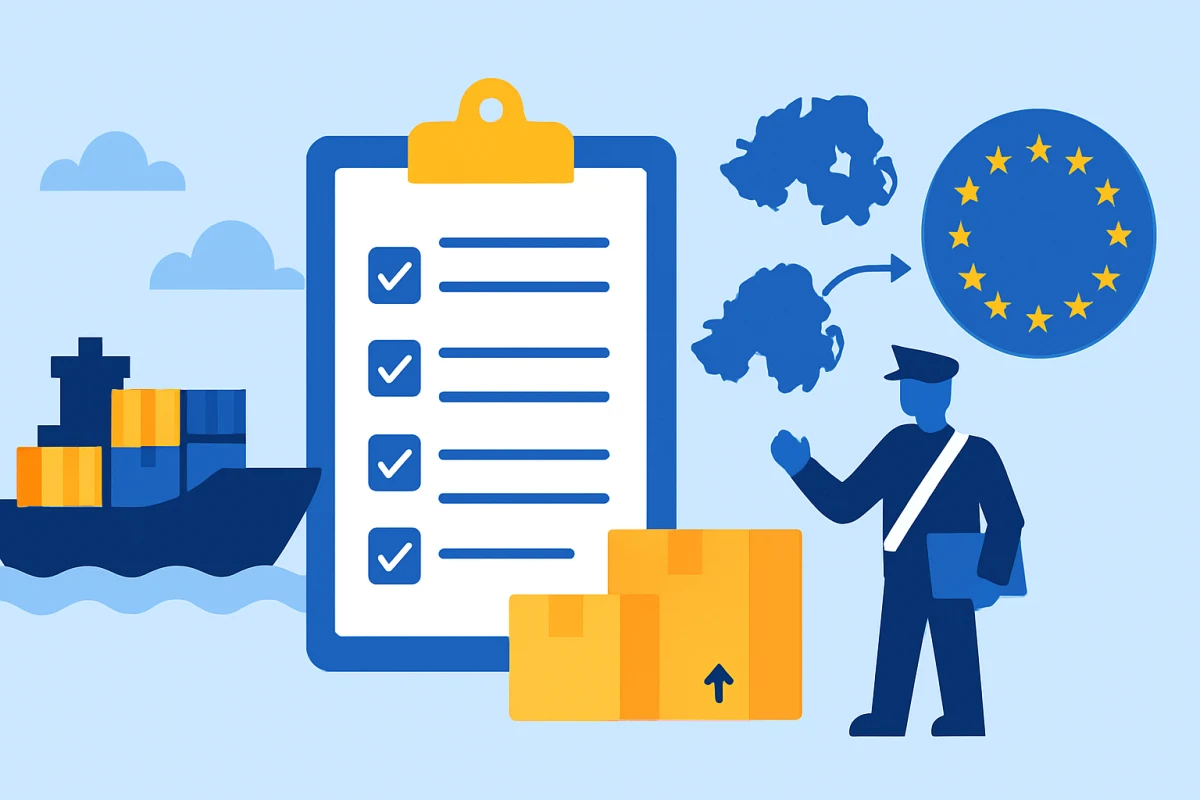
Moving goods from Great Britain into Northern Ireland crosses into the area covered by the Windsor Framework.
- GB EORI — to move the goods out of GB.
- XI EORI — for the NI end of the movement, particularly if you're using schemes such as the UK Internal Market Scheme or acting as the declarant in NI.
Traders regularly hold both a GB and an XI EORI for exactly this route.
When you legitimately need two or three EORIs
It's completely normal for a single business to hold more than one EORI. Here's how the combinations typically stack up:
| Your situation | EORIs you likely need |
|---|---|
| UK business importing/exporting GB only | GB |
| UK business trading GB and moving goods to/from NI | GB + XI |
| GB exporter acting as importer of record in the EU (DDP) | GB + EU |
| Business trading across GB, NI and the EU as declarant/importer | GB + XI + EU |
| EU business importing into GB and selling into NI | EU + GB (+ XI if declarant in NI) |
The rule of thumb: you need an EORI issued by each customs territory where you are the party lodging a declaration or named as importer/exporter. If a third party (a customer, freight forwarder or EU-based entity) fills that role, they use their own EORI, not yours.
Common prefix mix-ups on declarations
Because the numbers look similar, mistakes creep into customs declarations. Watch out for these:
- Using a GB number where an XI number is required. NI-related declarations that need the XI prefix will be rejected if a GB EORI is entered instead.
- Assuming your GB EORI works in the EU. It doesn't. GB numbers are not valid for EU customs; you need an EU EORI for that.
- Entering the wrong party's EORI. The importer's EORI and the exporter's EORI are different fields. Placing your EORI in the wrong box, or using a customer's number as your own, causes clearance failures.
- Typos in the trailing digits. A single wrong digit invalidates the number. Always verify before submitting.
Before you or your agent lodge a declaration, run each EORI through the EORI checker to confirm it's valid and formatted correctly for the customs territory in question.
Your next step
Start by mapping your actual trade routes, then match each to the table above. Most UK traders begin with a GB EORI, add an XI EORI if Northern Ireland is involved, and register for an EU EORI only when they act as importer or declarant inside the EU. If you already hold numbers, validate them now so a wrong prefix doesn't hold up your next shipment — and if you're missing one, sort it before your goods reach the border, not after.

Comments (0)
No comments yet. Be the first to share your thoughts!
Leave a comment
Your comment will appear after it's reviewed. Your email is never shown publicly.