
You ordered something from abroad, or you're shipping goods to a customer across a border, and suddenly DHL, FedEx or UPS emails you: "Please provide your EORI number to release your shipment." Your parcel is now sitting in a customs warehouse, and the clock is ticking on storage charges. This guide explains exactly why the courier is asking, whether you genuinely need an EORI, and how to respond fast so your goods keep moving.
Why the courier needs an EORI number from you
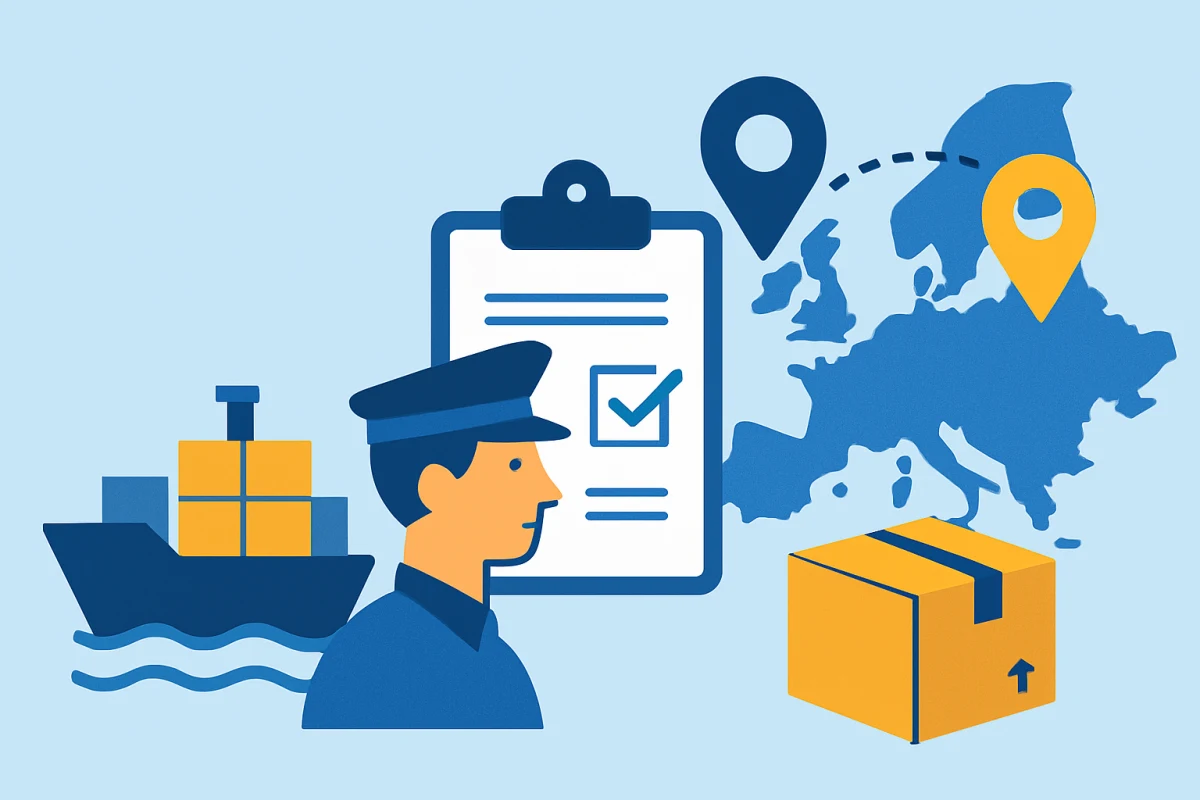
When goods cross a customs border, someone has to be named as the importer of record on the customs declaration. That party is legally responsible for the import, its duties, VAT and the accuracy of the paperwork. To identify that party, customs authorities use an EORI number — a unique Economic Operators Registration and Identification code.
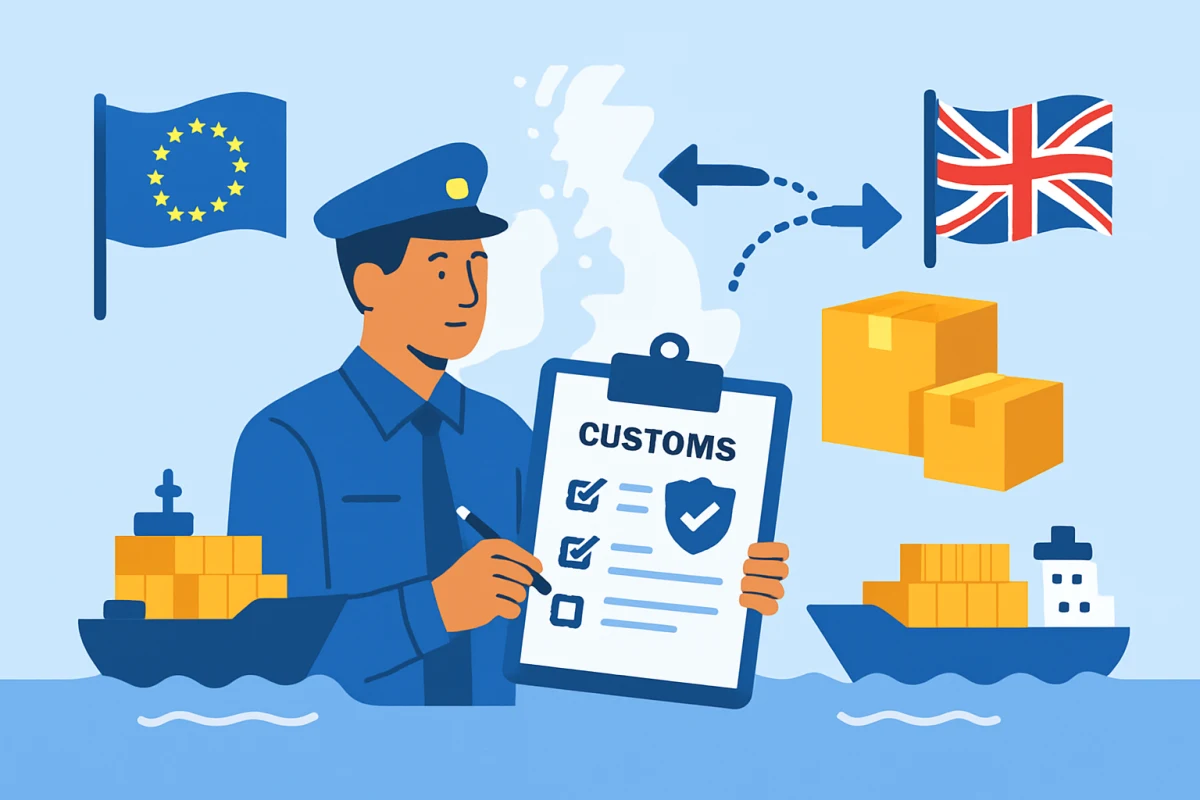
DHL, FedEx and UPS act as your customs broker. They lodge the declaration on your behalf, but they can't simply invent an importer identity — they need your EORI to clear the goods in your name. Without it, the declaration is incomplete and the shipment stays stuck.
This is why a request for a DHL EORI number, FedEx EORI number or UPS EORI number almost always arrives at the worst possible moment: the parcel is already in the country and can't be delivered until customs clears it.
Do you actually need an EORI number?
Not everyone the courier asks genuinely needs one. It depends on who you are and what you're importing.
Businesses: yes, you need one
If you're a company or sole trader importing or exporting commercial goods, you need an EORI number registered in the country where you make your customs declaration. In Great Britain that means a GB EORI number from HMRC. In the EU it's an EORI issued by the customs authority of the relevant member state. There's no way around it — commercial imports must have an importer EORI.
Private individuals: sometimes
Here's where it gets confusing. As a private person receiving a one-off gift or a personal purchase, you often don't need your own EORI — the courier can process it as a casual (non-commercial) import using their own procedures. But couriers increasingly ask everyone for one because it's the simplest way to complete the declaration, especially for higher-value items or anything that looks commercial.
| Your situation | EORI usually needed? |
|---|---|
| Registered business importing goods | Yes |
| Sole trader selling online | Yes |
| Private person receiving a personal gift | Usually no — ask for casual clearance |
| Private person buying high-value goods regularly | Often yes |
| Moving personal belongings when relocating | Usually no — different relief applies |
If you're a genuine private individual with a one-off parcel, your first move should be to reply and ask the courier to clear it as a casual/personal import rather than assuming you must register. Many will, provided you can show the item is for personal use and provide the value and description.
What happens if you ignore the request
Doing nothing is the expensive option. Couriers won't hold shipments indefinitely. Typically the sequence is:
- Reminder emails — usually a few days to respond.
- Storage / demurrage charges begin accruing once the free-storage window ends.
- Return to sender — after a set period the parcel is sent back, often at your cost, and you may still owe storage fees.
- Disposal in some cases if the goods can't be returned.
The takeaway: respond quickly, even if only to ask a question. A short reply stops the return clock in most cases.
How to get an EORI number quickly
If you do need one, applying is free and faster than most people expect.
Great Britain (GB EORI)
Apply through HMRC online. A GB EORI number starts with the letters GB followed by your VAT number plus three digits, or a unique number if you're not VAT-registered. Applications are often processed within a few working days, and sometimes within hours. See our full walkthrough on how to get an EORI number.
European Union
If you're importing into an EU country, you apply to the customs authority of the member state where the goods are cleared. An EU EORI is usually your national tax/VAT identifier prefixed with the two-letter country code. Northern Ireland traders may also need an XI EORI number for movements involving NI.
Already have one? Check it first
If you think you already registered, or you're unsure whether your number is valid, run it through our free EORI number checker before you reply to the courier. Sending an invalid or mistyped number just restarts the delay.
Template replies for DHL, FedEx and UPS
Paste one of these into the courier portal or email reply. Fill in the bracketed details.
If you have an EORI number
"Thank you for your message regarding shipment [tracking number]. My EORI number is [GB000000000000]. Please proceed with customs clearance and delivery. If you require any further documentation (invoice, value, or description of goods), let me know and I will provide it promptly."
If you're a private person and think it's a personal import
"Thank you for your message regarding shipment [tracking number]. This is a non-commercial parcel for personal use, not a business import. Please clear it as a casual/private import. I do not hold an EORI number as I am a private individual. If clearance genuinely cannot proceed without one, please confirm and explain why, so I can decide whether to register."
If you need time to apply
"Thank you for your message regarding shipment [tracking number]. I have applied for an EORI number and expect to receive it within [X] working days. Please place the shipment on hold and pause any storage charges where possible. I will send the number as soon as it is issued."
Avoiding this next time
If you import regularly, save yourself the panic:
- Register your EORI in advance and keep it on file.
- Add it to your courier account profile so it auto-populates on future shipments.
- Give it to your supplier so it appears on the commercial invoice.
- Double-check the format before sharing — see our guide to the EORI number format to make sure it's correct.
Your next step
If your parcel is being held right now: reply to the courier today, even if it's just to ask about casual clearance. If you know you need an EORI, apply through HMRC (or the relevant EU authority) straight away and send the number as soon as it arrives. And if you already have a number, confirm it's valid with our EORI checker before you send it — a two-minute check now can save days of delay.
Comments (0)
No comments yet. Be the first to share your thoughts!
Leave a comment
Your comment will appear after it's reviewed. Your email is never shown publicly.